
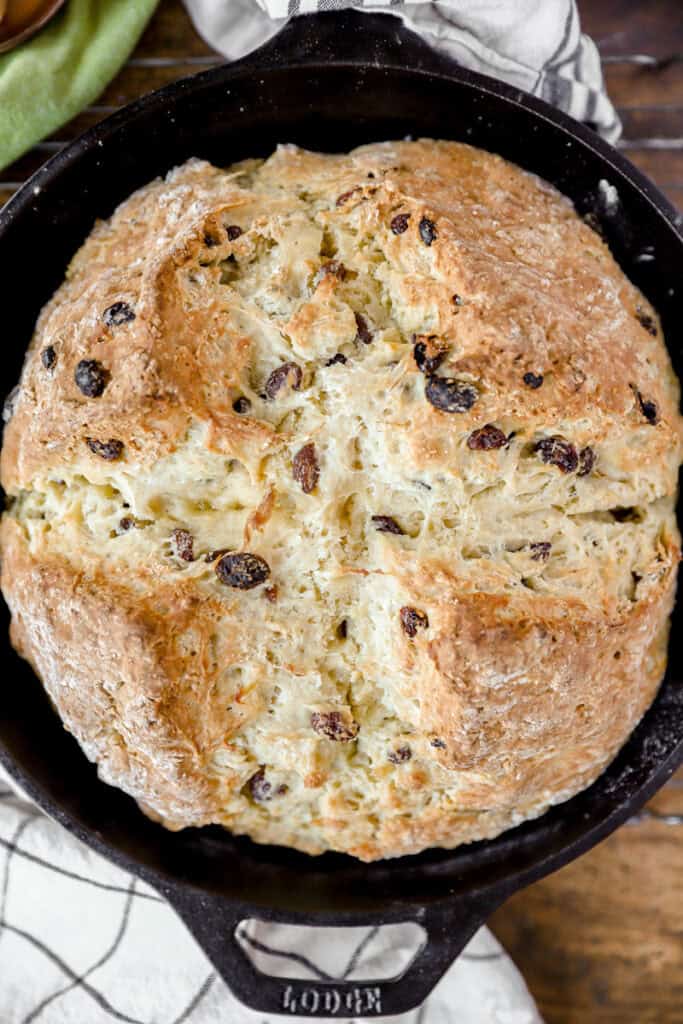
Irish soda bread is quite possibly the easiest bread recipe you can make. This bread requires no yeast, no time to proof, no complicated techniques! The rustic crusty appearance would make a beautiful addition to a St. Patrick’s Day celebration.
WHY IS IT CALLED SODA BREAD?
Maybe you’re like me, I had always wondered why it was called ‘soda’ bread. As a kid I thought maybe there was soda in the batter! Maybe it was club soda, or Sprite. I couldn’t be more wrong.
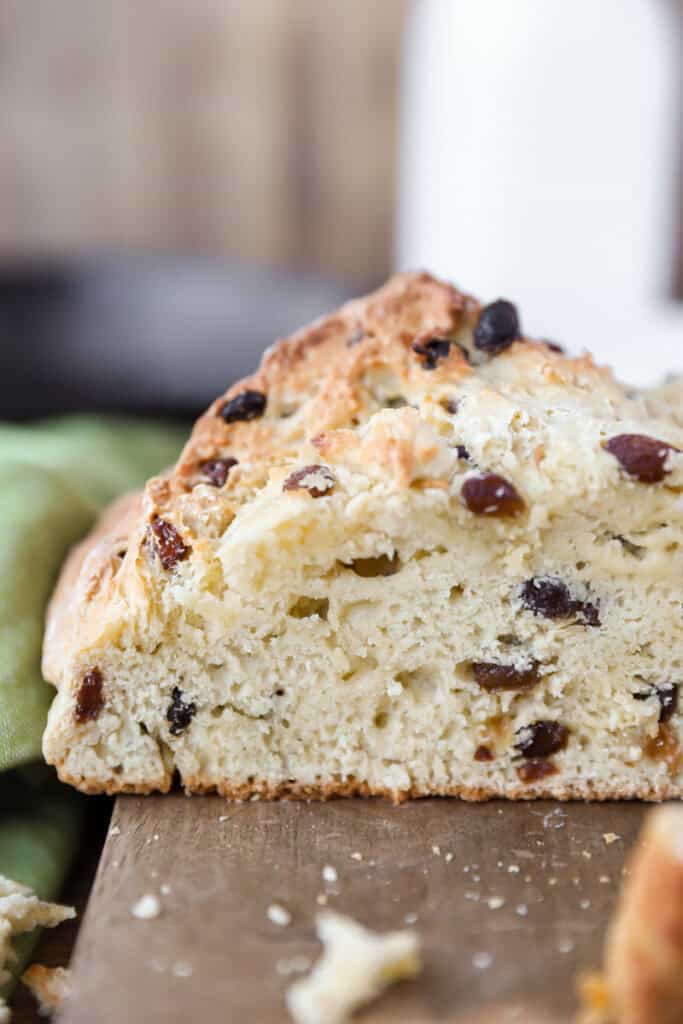
Since this is a bread without yeast, it needs a different leavening agent. The baking soda does the work of making the bread rise. I know, it’s not that exciting. But, it’s exciting that no yeast and no kneading makes this an easy bread you can whip up!
INGREDIENTS
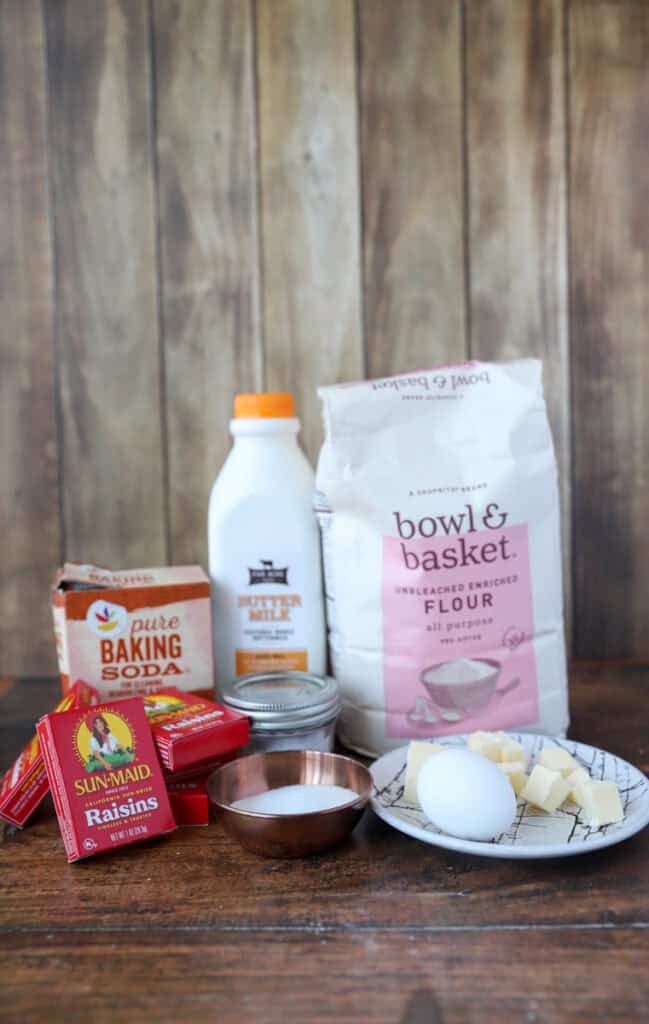
Here’s what you will need to make an Irish soda bread.
- All purpose flour
- Buttermilk
- Raisins
- Baking soda
- Salt
- White sugar
- An Egg
- Butter
Soda bread in it’s original creation in the 1800s was more basic: flour, baking soda, salt. Overtime the recipe evolved with the addition of buttermilk, eggs, raisins or currants, and some sugar to sweeten. You can read more here about the history of Irish Soda Bread.
RAISINS vs CURRANTS
Some Irish soda bread recipes might call for currants instead of raisins. So what’s the difference? They are similar in the fact that they are both derived from a dried grape, but the difference lies in the type of grape they come from. A currant are dried fruits from a Black Corinth grape. They are seedless, they are sweet but also can be described as more tart than a raisin.
A raisin is the dried fruit from a Muscat grape, which are green grapes. They are sweeter than a currant and a common snack. They absorb liquids and flavors and are a popular dried fruit in baking because of this.
BAKING TIPS
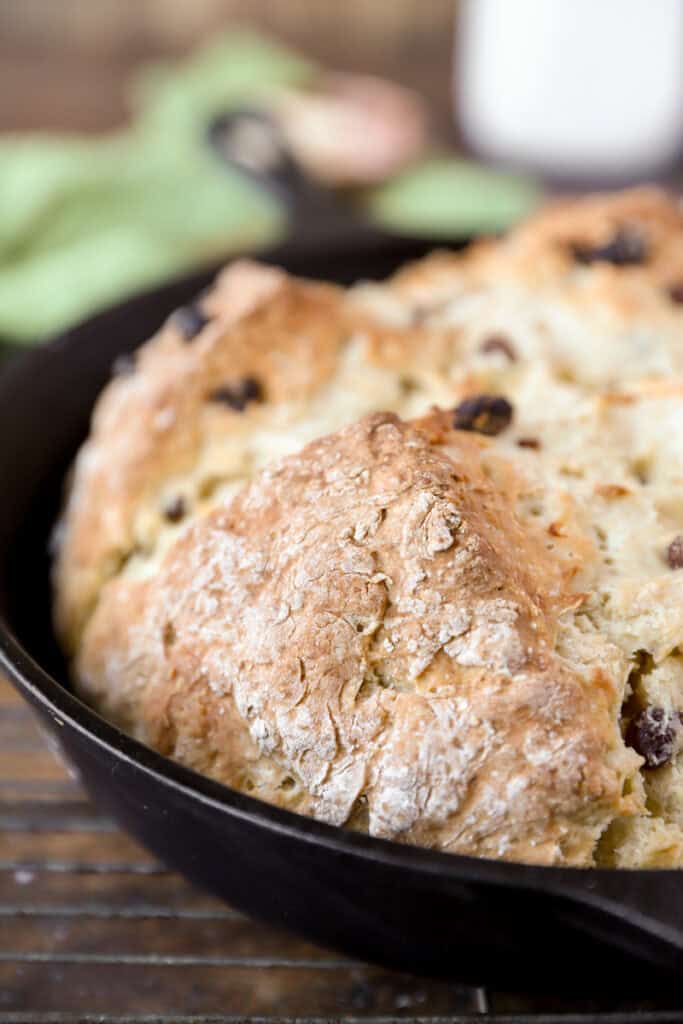
- You can bake the loaf directly on a sheet pan or in a cast iron skillet. The skillet helps maintain a perfectly founded shape.
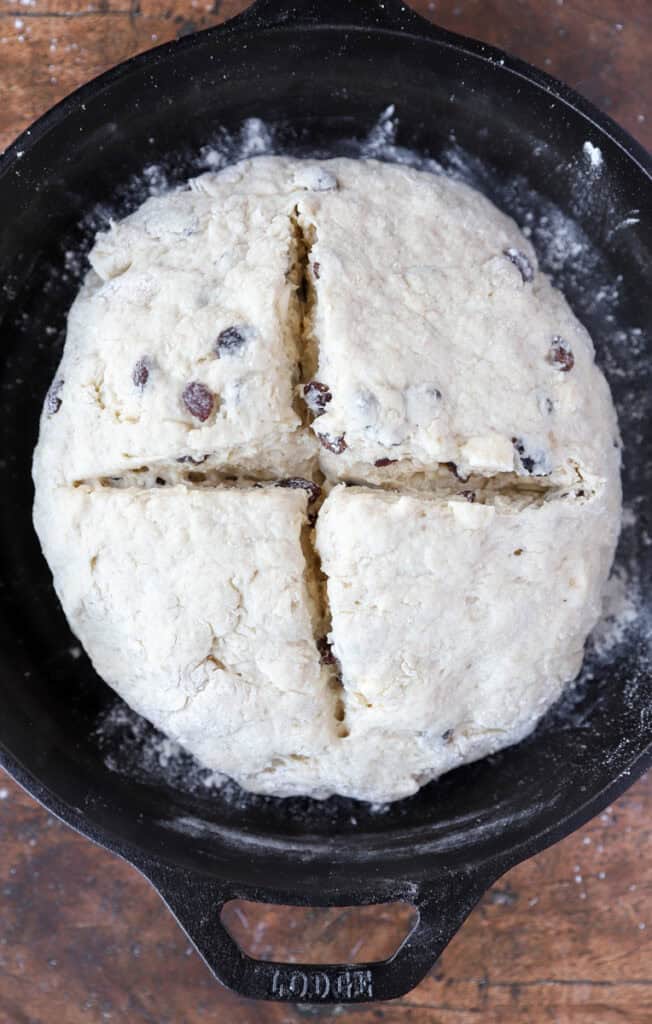
- The X sliced into the top helps the bread bake evenly and also creates that beautiful appearance at the end, don’t skip this!
- This bread doesn’t have to be perfectly smooth on top, the ridges and crust help give it a rustic appearance. Just mold and knead gently enough to get a round loaf, then you’re done!
- Buttermilk is crucial to this recipe because it reacts with the baking soda to make the bread rise. While there hacks to creating buttermilk if you don’t’ have it, I strongly recommend making sure you buy actual buttermilk and don’t take any shortcuts.
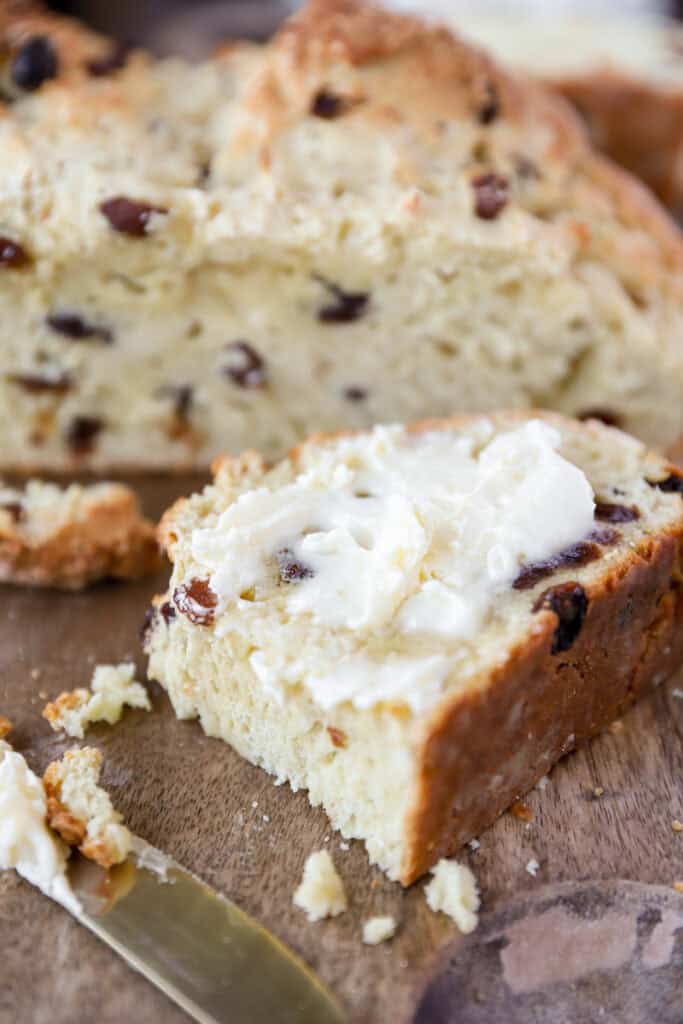
Want even more soda breads? I have several variations to try!
Cinnamon raison soda bread
Orange cranberry soda bread
Mini soda breads
Blueberry soda bread
And if you like easy baking recipes then you might also want to make my Copycat Orange Panera Scones.
PrintIrish Soda Bread
Irish Soda Bread is a hearty and sweet bread with raisins. No yeast is required, the baking soda is the leavening agent that makes the bread rise. Have this as a dinner side item or at breakfast with coffee.
- Prep Time: 10
- Cook Time: 50
- Total Time: 1 hour 5 minutes
- Yield: 1 loaf
- Category: Baking
- Method: Baking
- Cuisine: Irish
Ingredients
4 cups flour
4 tablespoons sugar
1 teaspoon baking soda
1 1/2 teaspoon salt
4 tablespoons cold butter, cut into 1/2 inch pieces
1 3/4 cups cold buttermilk, shaken
1 large egg, lightly beaten
1 cup raisins
Instructions
1. Heat oven to 375. Prepare a baking sheet sprayed with cooking spray.
2. Combine the flour, sugar, baking soda, and salt with an electric mixer with the paddle attachment. Add the butter and mix on low until the butter is combined.
3. Lightly beat the egg in the buttermilk and with the mixer on low speed pour into flour mixture. Mix the raisins in a tablespoon of flour and add into the dough.
4. Flour your counter-top and your hands. Dump the dough on the flour and lightly knead a few times until you get a round loaf. It will be very sticky at first so make sure you have enough flour so it doesn’t stick to your hands.
5. Place the loaf onto the baking sheet or a lightly floured cast iron skillet and cut an ‘X’ into the top with a serrated knife. Bake for 50 minutes, until a knife comes out clean.
Notes
Adapted from: Barefoot Contessa